

Chinese Buddhist texts : ค้นหาหนังสือธรรมะ
หน้าหนังสือทั้งหมด
131
Eastern Han Buddhist Meditation and Daoism
Eastern Han Buddhist meditation and Daoism
By the middle of the first century CE, a Buddhist community was already in existence in China, and growing. The arrival of translators from Central Asia and
By the first century CE, Buddhism had begun to take root in China, with translators arriving from Central Asia and India to convert texts into Chinese. They initially faced challenges in accurately co
87
Buddhist Manuscripts in China: Theravāda Buddhism in Sipsong Panna
Buddhist Manuscripts in China: A Case Study of Theravāda Buddhist Manuscripts in Sipsong Panna (Xishuangbanna, Yunnan Province, PRC)
Joe Zhou Ya
China, like many other countries in the world, is a c
This article delves into the rich tapestry of Buddhist culture in China, specifically focusing on the Theravāda Buddhism of the Dai people in Sipsong Panna, Yunnan Province. Buddhism's introduction to
92
The Role of Sa-Paper in Buddhist Manuscripts
are also certain exceptions to this. For example, Buddhist scriptures that are chanted daily are always copied on sa-paper manuscript for the convenience of page turning and reading. Secular literatur
Sa-paper, made by local artisans, serves as a practical alternative for copying both Buddhist and secular texts in Sipsong Panna. Although less symbolic than palm leaves, sa-paper's ease of use and du
90
Buddhist Manuscripts from Sipsong Panna Region
Buddhist manuscripts from the Sipsong Panna region can be divided into four categories. The first category consists of the Dai Pāli Tripiṭaka and Tripiṭaka commentary (三藏琢) which is represented by fiv
Buddhist manuscripts from the Sipsong Panna region are categorized into four main groups: the Dai Pāli Tripiṭaka and Tripiṭaka commentary, frequently used Pāli Canon texts, Theravāda Buddhist literatu
97
Preservation of Palm-Leaf Scriptures in Dai Buddhism
donate palm-leaf scriptures as an act of merit and such donations
appear less frequently in the sacred dantam (贽坦) or offering
ceremony. Donors prefer to donate Buddhist scriptures printed
using mod
This text discusses the decline in donations of traditional palm-leaf scriptures in favor of more accessible and readable texts printed on Chinese and sa-paper. Reasons include cost, legibility, and t
6
Exploring Early Buddhist Schools: Pāli and Chinese Connections
considered to have already appeared in the early Buddhist schools (Hinayāna) period at the latest and to have been widely recognized by at least two schools in company of them.
Throughout a study of t
This study examines the connections between Pāli and Chinese stanzas through early Buddhist schools, specifically focusing on: (1) Two Pāli stanzas aiding the understanding of Chinese transliterated t
91
Exploration of Theravāda Buddhist Manuscripts in Sipsong Panna
literature.9 It is notable that the Agama Sutras (阿含经) discovered in the Xishuangbanna region are incomplete. For example, the Hinayana Agama should have contained the Khuddaka Patha (小品), Dharma-phra
The Agama Sutras found in the Xishuangbanna region are notable for their incompleteness. The Hinayana Agama is expected to contain various texts that are partly missing. According to The Complete Coll
121
The Influence of An Shigao on Mindfulness Breathing Meditation in Eastern Han China
In this paper I explore the connections between An Shigao and the introduction of the Indian Buddhist meditation technique of mindfulness breathing meditation, or ānāpānasmṛti, into Eastern Han China.
This paper examines An Shigao's role in introducing the Indian mindfulness breathing meditation technique, ānāpānasmṛti, into Eastern Han China. The phrase「息中具有四大。 而心在中」suggests that the mind should f
155
Digital Dictionary of Buddhism and Related Works
Muller, A. Charles, ed. “Digital Dictionary of Buddhism.” Digital Dictionary of Buddhism 電子佛教辭典, n.d. Accessed December 4, 2012.
—. “Yi 意, Mention.” Digital Dictionary of Buddhism, Nattier, Jan. 200
This compilation features key works in early Chinese Buddhism, including the Digital Dictionary of Buddhism edited by A. Charles Muller, and significant contributions from scholars such as Jan Nattier
10
Congratulatory Letter for Dhammachai International Research Institute
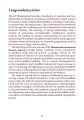
**Congratulatory letter**
The 60th Dhammachai Education Foundation of Australia and New Zealand has developed an increasing commitment in recent years to the academic study of the Buddhist tradition,
The 60th Dhammachai Education Foundation of Australia and New Zealand has strengthened its commitment to studying the Buddhist tradition. The foundation established the Dhammachai International Resear
138
Exploring Chinese Philosophical Texts and Their Influence
Kohn, Livia, and Yoshinobu Sakade. Taoist Meditation and Longevity Techniques. Center for Chinese Studies, University of Michigan, 1989.
Mair, Victor H. “What Is Geyi, After All?” In Philosophy and Re
This collection examines various texts that shed light on the development of Chinese philosophical thought and literary traditions. Works range from Livia Kohn's exploration of Taoist meditation pract
120
An Shigao and Early Chinese Meditation Techniques
An Shigao and Early Chinese Meditation Techniques¹
Phra Kiattisak Kittipanyo² (University of Otago)
An Shigao安世高 (147~168 CE) played an important role in the early transmission of Buddhism into China
An Shigao (147-168 CE) significantly influenced the early transmission of Buddhism in China. Despite a focus on his ethnicity and translation style, he is recognized as a respected meditation master.
565
Buddhist Manuscripts and Translations
Harrison, Paul M., trans. 1998. *The Pratyutpanna samādhi sūtra,* BDK English Tripiṭaka. Berkeley, CA: Numata Center for Buddhist Translation and Research.
Harrison, Paul. 2006. "Vajracchedikā Prajñāp
This collection features key translations and studies of Buddhist manuscripts, highlighting the work of scholars like Paul M. Harrison and Jens-Uwe Hartmann. Notable texts include the Pratyutpanna sam
33
Exploring Buddhist Texts and Influence
Bernhard, Franz.
1970 "Gåndhārī and the Buddhist Mission in Central Asia." Ánjali: Papers on Indology and Buddhism: A Felicitation Volume Presented to Oliver Hector de Alwis Wijesekera on His Sixtieth
This collection of works explores the significant contributions to Buddhist scholarship, including analyses of the Gåndhārī texts, the investigation of the Därșanatika, and the characteristics of the
95
Dai Buddhist Manuscripts in Yunnan's Dehong Prefecture
It is noteworthy that there is a community of Dai people in the Dehong Autonomous Prefecture in the west of Yunnan, and a wide range of Buddhist manuscripts are stored there. Palm-leaf manuscripts are
This text discusses the unique tradition of Buddhist manuscripts among the Dai people in Dehong Autonomous Prefecture of Yunnan, where various types of manuscripts are produced. Most texts utilize sa-
82
Buddhist Manuscripts and Literature from Central Asia
Karashima, Seishi and Wille, Klaus (TextsEditors-in-chief). 2009.Buddhist Manuscripts from Central Asia- The British Library Sanskrit Fragments, Volume II.1-2, Tokyo: The International Research Instit
This document highlights important works and contributions in the field of Buddhist literature and manuscripts from Central Asia. It references various authors and their significant texts, such as 'Bu

68
การฝึกสมาธิและการบำบัดด้วยธรรมะ
MEDITATORS
FR
N
ew Year, is as important to
the Chinese people, as Christmas is
to the Christians. Chinese New Year
also allows time for long holidays
after
working hard all year. Most
Chinese people
MEDITATORS FR N ew Year, is as important to the Chinese people, as Christmas is to the Christians. Chinese New Year also allows time for long holidays after working hard all year. Most Chinese people
139
Buddhist Texts and Historical Studies
The SAT Daizōkyō Text Database Committee. “出三藏記集 (No. 2145 (僧祐提)) in Vol. 55.” Taishō Shinshū Daizōkyō (大正新修大藏經), March 17, 1998. http://21dzk.l.u-tokyo.ac.jp/SAT/ddb-sat2.php?mode=detail&useid=2145,_
This collection includes significant Buddhist texts and studies, such as the Mahāyāna Buddhism foundations by Paul Williams and insights into early Chinese Buddhism by Erik Zürcher. Scholarly works di
2
World Buddhist Sangha Youth Organization
WORLD BUDDHIST SANGHA YOUTH
OBJECTIVE
* To develop Buddhist youth organization and exchanges of Buddhist Sangha youth worldwide.
* To assist Buddhist Sangha youth activities throughout the world.
* T
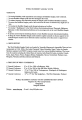
The World Buddhist Sangha Youth (WBSY), founded by Venerable Mugunuwela Anuruddha Thera in 2004, aims to develop Buddhist youth organizations and facilitate international exchanges among young Buddhis
3
Influence of Lokappadīpakāsāra on Pāli Buddhism
Abstract:
**Influence of Lokappadīpakāsāra**
on the Pāli Buddhism in Later Period:
Based on Quotations of the *Lokappadīpakāsāra* in the *Cakkavaḷadīpaṇi* and *Lokaśaṅṭhānājotaratanagaṇṭhī*
by
This study examines the significant influence of the Lokappadīpakāsāra, a 14th-century text, on two later Pāli texts: the Cakkavaḷadīpaṇi and Lokaśaṅṭhānājotaratanagaṇṭhī, both dating from the 16th to